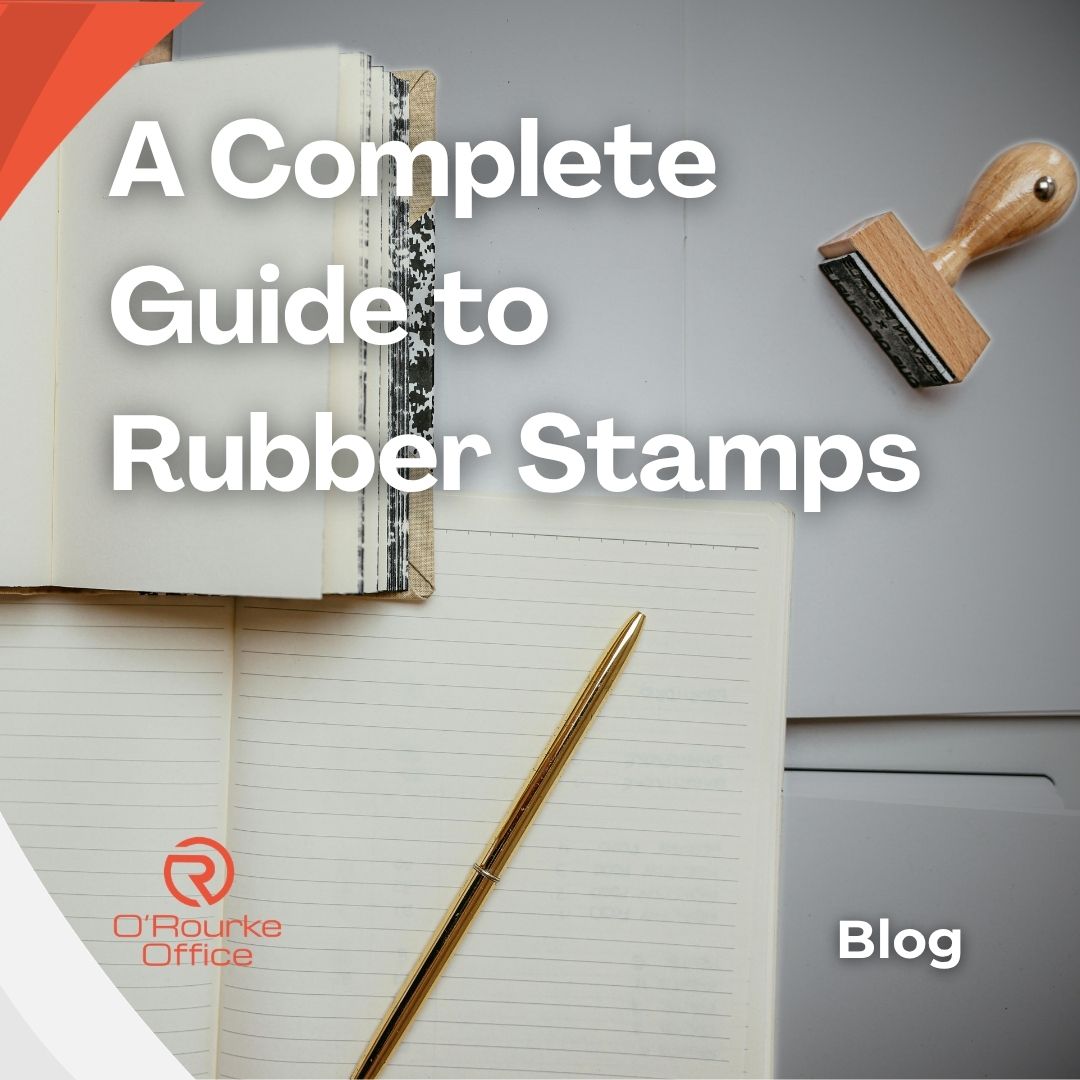
Rubber stamps have been a staple in offices, schools, and businesses for over a century, offering a simple, reliable way to mark documents, authenticate paperwork, and streamline repetitive tasks. Despite the rise of digital tools, stamps remain popular for their speed, consistency, and professional finish. Today, they’re used for everything from “PAID” and “RECEIVED” markings to custom logos, branding, and educational feedback.
In this week’s newsletter, we break down the different types of rubber stamps, how they’re used, and why they remain a favourite for admin teams, teachers, and businesses alike.
🖨️ The Main Types of Rubber Stamps
1. Traditional Rubber Stamps
Traditional stamps use a separate ink pad. They’re ideal for low‑volume use, allow easy ink‑colour changes, and work well for custom designs. Best suited for occasional tasks like signatures, approvals, or special markings.
2. Self‑Inking Stamps
Self‑inking stamps contain a built‑in ink reservoir that re‑inks the stamp after each impression. Perfect for high‑volume office work such as:
- “FILED”
- Dates
- Addresses
- Admin processing
They deliver thousands of clean impressions with minimal mess.
3. Pre‑Inked Stamps
Pre‑inked stamps embed ink directly into the rubber die, producing crisp, detailed impressions. They’re ideal for:
- Logos
- Fine text
- Branding
- Professional documentation
Compact, clean, and highly precise.
📝 Choosing the Right Stamp
When selecting a stamp, consider:
- Usage frequency — Daily use? Choose self‑inking. Occasional? Traditional works well.
- Detail required — Simple text suits basic stamps; intricate logos need pre‑inked.
- Size —
- 1–2 cm for approvals
- 4–6 cm for addresses or company details
- Surface type — Standard paper is best; glossy or fabric surfaces require specialty inks.
Common applications include:
- Document authentication (“Certified True Copy”)
- Admin processing (“Approved”, “Urgent”)
- Branding envelopes or packaging
- Teacher feedback (“Great Work!”)
✔️ Getting Perfect Impressions
To ensure clean, consistent results:
- Stamp 10–15 times initially to distribute ink evenly
- Use a flat, hard surface
- Apply firm, even pressure for 5–10 seconds
- Avoid over‑inking self‑inkers
- Clean monthly with mild soapy water
- Store upright, away from heat and sunlight
Proper care extends stamp life for years — making them far more cost‑effective than handwriting or reprinting.
🌍 Why Rubber Stamps Still Matter Today
Even in digital workplaces, rubber stamps continue to play a vital role:
- Authenticating physical documents
- Speeding up workflows
- Adding professional polish
- Supporting hybrid work environments
Legal firms rely on them for seals, businesses use them for branding, and schools use them for efficient feedback.
They’re also sustainable — reusable thousands of times, unlike single‑use labels — and perfect for creative branding on packaging or stationery.
🛒 Quick Buyer’s Checklist
Before ordering a stamp, confirm:
- Type — self‑ink, pre‑ink, or traditional
- Text/logo and size
- Ink colour (black is most versatile)
- Mount style — handle, desktop, or pocket
- Supplier quality — durable materials, custom options
Rubber stamps deliver efficiency, professionalism, and reliability that digital tools can’t always match. The right choice turns routine tasks into seconds, not minutes.
🔗 Explore Our Rubber Stamp Range
Click Here to Visit Our Rubber Stamp Page
📍 Get In Touch
📞 (049) 433 1444 / 071 964 4251
📧 info/sales@orourkeoffice.ie
🌐 orourkeoffice.ie | online.orourkeoffice.ie/home